What is Mirchi Havan? Meaning, Process and When It Is Performed
A respectful explanation of Mirchi Havan in the Baglamukhi tradition at Nalkheda — its meaning, how the ritual is performed, when it is advised and what to ask first.
By Acharya Rajguru Ji · Published
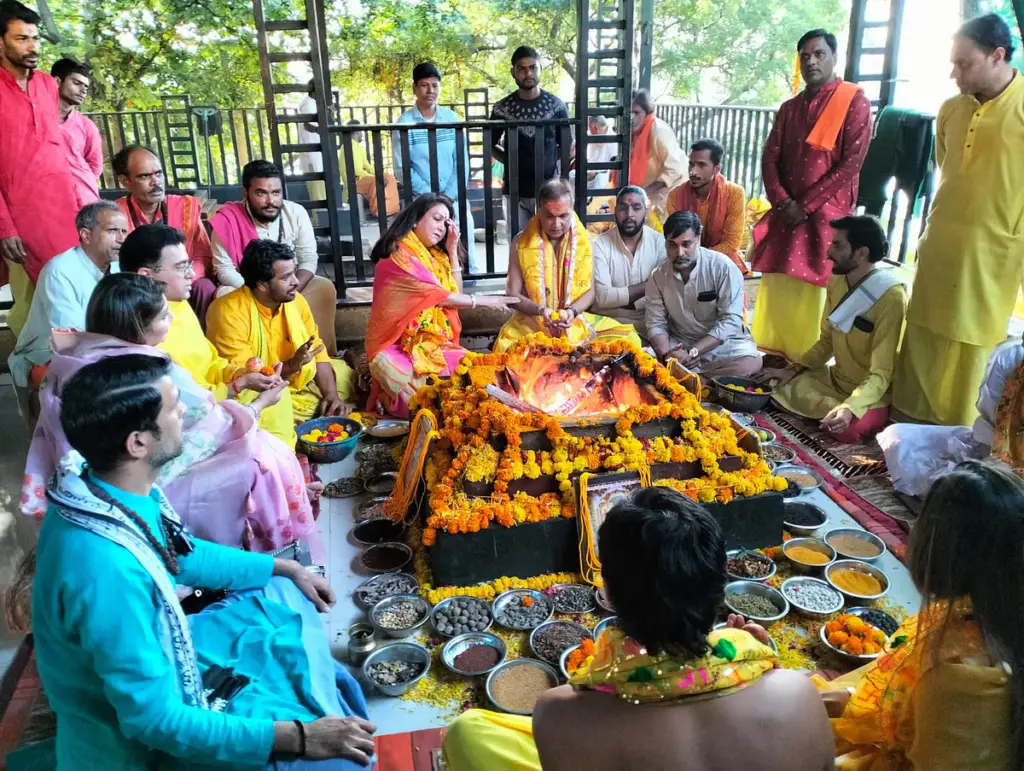
Devotees who come to Nalkheda often hear about the "Mirchi Havan" — a havan in which dried red chillies are offered into the sacred fire. The idea can sound unusual, even alarming, to someone hearing it for the first time. This article explains what a Mirchi Havan is within the Baglamukhi tradition, what the offering is understood to mean, how the ritual is generally performed, when it is considered, and what you should ask before deciding on it.
We write this with respect for the tradition and with honesty about its limits. A Mirchi Havan is a ritual of faith. It does not harm anyone, it is not a weapon, and it cannot guarantee any outcome.
Maa Baglamukhi and the idea of stambhan
To understand the Mirchi Havan, it helps to understand the goddess to whom it is offered. Maa Baglamukhi is one of the ten Mahavidyas. She is widely revered as Pitambara — the goddess dressed in yellow — and is associated with stambhan, the power to still or restrain. In devotional understanding, she stills what is harmful: hostile speech, deceit, confusion, and the fear and agitation within the devotee's own mind.
This is why devotees facing disputes, false accusations, opposition or persistent obstacles turn to her. Their prayer is not to harm anyone, but to be protected, to see clearly, and to find the strength to face their situation with steadiness.
Nalkheda, in the Agar Malwa district of Madhya Pradesh, is regarded by devotees as a Siddh Peeth of Maa Baglamukhi, and havans for her have long been performed here. You can read more about the place in our Nalkheda temple history page.
What the chilli offering signifies
In a Mirchi Havan, dried red chillies are offered into the fire along with other samagri while Baglamukhi mantras are recited. Different traditions explain the symbolism in slightly different ways, but the common understanding is this:
- Burning away what is harmful. The sharp, pungent chilli is understood to represent harshness, negativity and obstruction. Offering it into Agni is a symbolic act of surrendering these forces to be consumed by the fire.
- Intensity of the sankalp. The ritual is regarded as a focused and intense form of worship, undertaken when a devotee feels their situation is serious.
- Protection rather than attack. In the right spirit, the prayer is for one's own protection and for harmful influences to be stilled — not for injury to any person.
The smoke from burning chillies is, of course, very pungent. This is one practical reason the ritual is performed with care, in a suitable setting, by people experienced with it.
How a Mirchi Havan is generally performed
Every ritual is shaped by the sankalp and by the guidance of the pandit, so details vary. What follows is a general outline so you know what to expect; Acharya Rajguru Ji will explain the specific steps for your booking.
1. Sankalp
The devotee's name, gotra (if known), place and intention are formally spoken before Maa Baglamukhi. This is the heart of the ritual — the clear statement of why it is being performed.
2. Preliminary worship
As with other havans, the ritual begins with Ganesh pujan and the invocation of the deities, followed by the establishment and worship of Agni in the havan kund.
3. Baglamukhi mantra jaap
Baglamukhi mantras are recited, sometimes in a set count decided in advance. For larger sankalps the jaap may be shared between pandits — [TODO: confirm typical jaap count and pandit count for mirchi havan].
4. Ahutis with chillies and samagri
Ahutis (offerings) are made into the fire with the mantras. Dried red chillies are offered along with other havan samagri. Yellow items associated with Maa Baglamukhi are also part of her worship more generally.
5. Purnahuti, aarti and prayer
The ritual concludes with the purnahuti (final offering), aarti and a prayer for protection and peace. Devotees are encouraged to pray sincerely and to let go of anger.
When is a Mirchi Havan considered?
A Mirchi Havan is not an everyday or default ritual. Devotees usually ask about it when they are facing:
- Long-running disputes or opposition that feel overwhelming.
- Court cases or legal pressure, alongside proper legal advice.
- A strong sense of hostility, envy or obstruction around them.
- Persistent fear or agitation they wish to surrender before the goddess.
Even then, it is not automatically the right choice. In many situations a regular Baglamukhi Havan, mantra jaap or Shatru Badha Nivaran Puja may be more appropriate. Acharya Rajguru Ji will listen to your situation and tell you honestly whether a Mirchi Havan is suitable at all.
Important cautions
Because the Mirchi Havan is sometimes misunderstood, we want to be clear about a few things:
- It is not black magic and is not meant to harm anyone. A ritual done with the intention of hurting another person goes against the spirit of devotion. Rajguru Ji does not perform rituals for that purpose.
- No outcome is guaranteed. No havan can guarantee winning a case, recovering money, or any other result. Anyone who promises a guaranteed outcome for a fee is not being honest.
- It is not a substitute for practical action. If you are facing a legal matter, consult a qualified lawyer. If you have a health concern, see a doctor. Faith and practical responsibility go together.
- The smoke is strong. Elderly family members, small children and people with breathing difficulties should ask in advance about where to sit, or may prefer to watch from a distance or online.
Mirchi Havan and the court case question
Many devotees ask specifically about Mirchi Havan for court cases. It is understandable — legal matters are stressful and slow. Devotees do perform havans during such times to seek strength, clarity and Maa's grace. But please understand: the havan is a prayer, not a legal strategy. Continue to follow your lawyer's advice, attend your hearings, and be truthful. Our Court Case Havan page explains this further.
Questions to ask before booking a Mirchi Havan
- Is a Mirchi Havan actually suitable for my situation, or would another ritual be better?
- What is the sankalp wording, and can I review it?
- How long will it take, and how many pandits will take part?
- What is the dakshina, and does it include samagri? — see Baglamukhi Havan cost in Nalkheda
- Can my family attend, and are there any precautions because of the smoke?
- If I cannot travel, can I watch online?
Preparing yourself
Devotees are traditionally encouraged to approach any Baglamukhi ritual with a calm and disciplined mind. Many choose to wear yellow, to keep a simple sattvic diet on the day, and to spend a few minutes in quiet prayer beforehand. Rajguru Ji will tell you if anything specific is recommended — [TODO: confirm any personal observances Rajguru Ji asks devotees to follow before a mirchi havan].
Most importantly, try to let go of anger toward the people involved in your difficulty. The prayer is for protection and for harm to be stilled — including the harm that anger does within us.
How to ask about a Mirchi Havan
Send a WhatsApp message to Acharya Rajguru Ji at 8959182032 with your name, your city or country, a brief description of your situation and your preferred dates. He will tell you whether a Mirchi Havan is appropriate and explain the arrangements. You can attend at Nalkheda or, if you are far away, join by live video.
Jai Maa Baglamukhi.
About the author
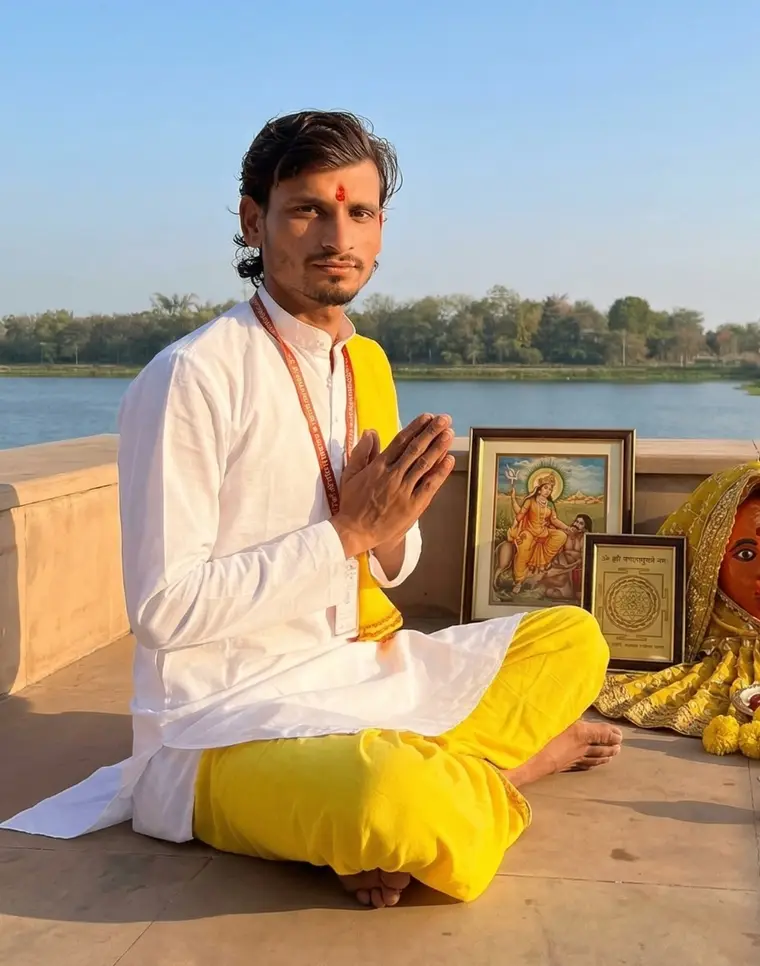
Acharya Rajguru Ji offers personal Baglamukhi havan, puja, mantra jaap and anushthan services at Nalkheda, Madhya Pradesh. This is a personal service, not the temple administration.
Read more about Rajguru Ji