Baglamukhi Puja
बगलामुखी पूजा
Traditional worship of Maa Baglamukhi with sankalp, archana and aarti.
Ritual format
Puja
Duration
Approximately 1–2 hours
Live participation
Available
Photos / recording
Photos shared after the puja
Prasad
India · International · On request
Overview
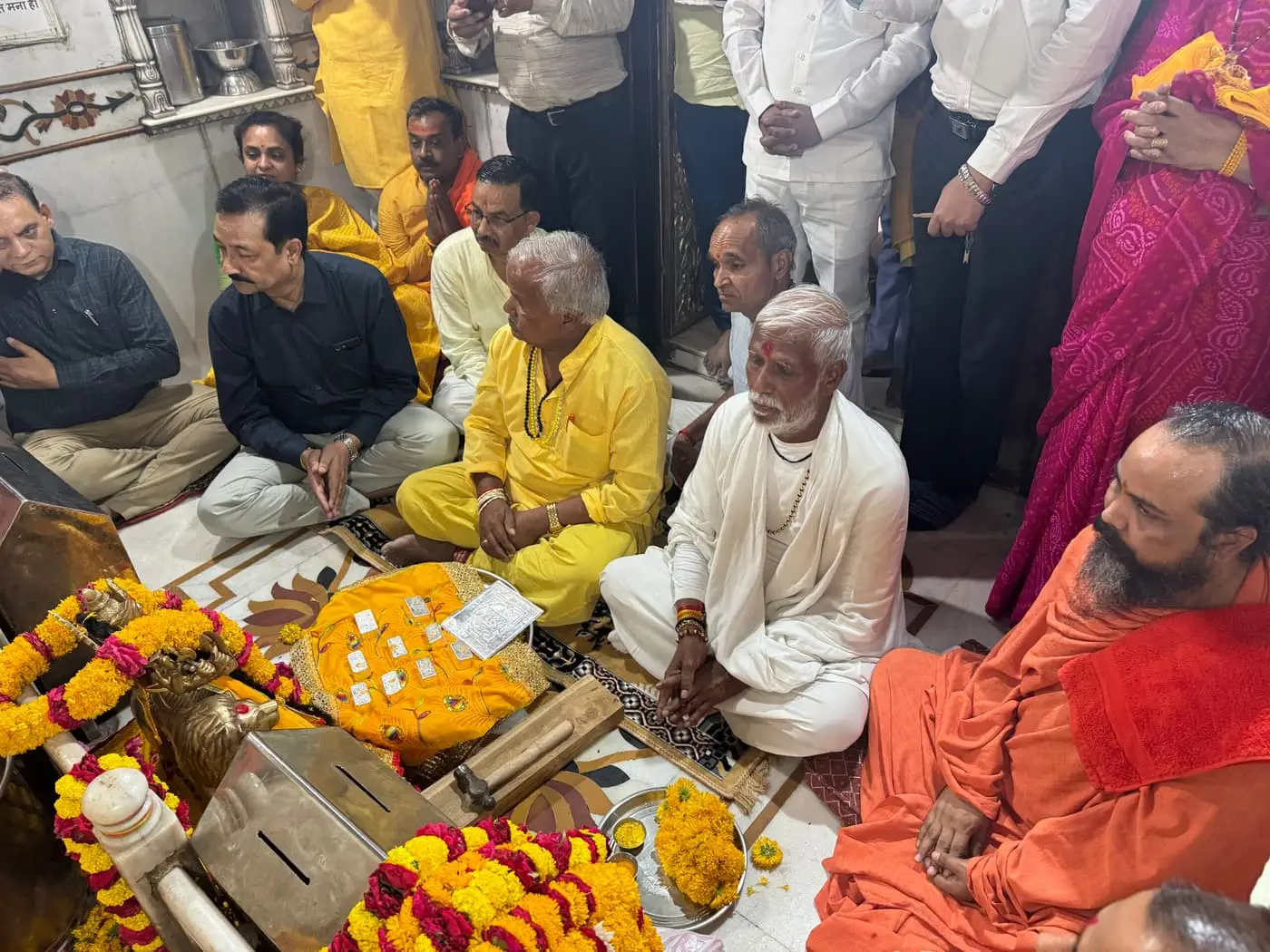
The Puja is the core act of worship — the deity is invoked, offered upachara (water, cloth, flowers, incense, lamp and naivedya) and honoured with mantra and aarti, with the devotee's Sankalp offered at the start.
At Nalkheda the puja is performed before the swayambhu idol of Maa Baglamukhi, following the vidhi observed at the temple.
Traditional significance
According to traditional belief, offering worship at a Siddhpeeth carries particular significance because the sthaan itself is regarded as consecrated by long-standing sadhana.
Turmeric, yellow cloth and yellow flowers are traditionally associated with Maa Baglamukhi and form part of the offering.
Who traditionally seeks this ritual
- Devotees making a first offering at the temple
- Families observing a birthday, anniversary or vow
- Those who wish to begin a longer sadhana with a preliminary puja
- Devotees abroad who wish worship offered in their name
Rituals are performed traditionally and with sincerity. No specific outcome is promised or guaranteed.
The ritual process
Step 1
Sankalp
Devotee name, gotra and intention recorded and offered.
Step 2
Invocation
Ganesh puja, kalash sthapana and invocation of Maa Baglamukhi.
Step 3
Shodashopachara
The sixteen traditional offerings made to the deity.
Step 4
Archana
Recitation of the Baglamukhi names and mantra during offerings.
Step 5
Aarti & Prarthana
Concluding aarti and prayer in the devotee's name.
What your Sankalp includes
- Devotee name
- Gotra (if known)
- Family members to be included
- Intention in your own words
- Current city and country
- Preferred date or tithi
What you receive
- Sankalp confirmation
- Photographs of the puja
- Prasad on request
- A short account of what was offered
Preparing for the ritual
- Share correct spellings of names and gotra
- Bathe before the scheduled time if joining live
- Keep the intention simple and specific
Questions devotees ask
What is the difference between puja and havan?
A puja is worship offered directly to the deity with upachara. A havan adds the fire ritual with mantra ahutis. Many devotees perform both together.
Can the puja be done in my family's name?
Yes. Family members can be named in the Sankalp.
Related rituals
Baglamukhi Havan
The traditional fire ritual of Maa Baglamukhi, performed at the Nalkheda Siddhpeeth.
View ritualBaglamukhi Mantra Jaap
Counted recitation of the Baglamukhi mantra offered in the devotee's name.
View ritualNavratri Special Anushthan
Nine days of worship, jaap and havan observed during Chaitra and Sharad Navratri.
View ritualSpeak with Acharya Rajguru Ji
Share your situation in confidence. He will advise whether this ritual is suitable for you.
Request a private consultation